Quick answer: Good epoxy floor cleaning is simple: sweep or dust mop your coated floor regularly so grit does not scratch the finish, wipe up spills as soon as they happen, and wet mop with warm water when it needs more than a dry pass. For tougher jobs, a little ammonia in hot water does the trick — Hunker’s guide to cleaning epoxy floors recommends the same diluted-ammonia approach. Skip acidic, soap-based, and bleach cleaners, because those dull the gloss over time. Follow those few habits and a professionally installed floor from 865 Coatings and Concrete Restoration will stay sharp for years and keep its warranty intact.
This concrete coating maintenance routine applies to the epoxy, flake, metallic, polished, and sealed concrete floors we install across Knoxville, TN and nearby areas.
Epoxy Floor Cleaning Basics
Epoxy floor cleaning really comes down to two habits: keep grit off the floor, and never let a spill sit. Everything else in this guide, from how to clean an epoxy garage floor properly to seasonal care, is just detail layered on top of those two rules. If you only remember one thing about concrete coating maintenance, remember that.
Right After Your Floor Is Installed
A fresh coating needs time to cure before it takes on weight. Your install crew will give you the exact timeline for your project, so wait until they clear the floor before you walk on it, and wait a bit longer before you park on it or set heavy items back in place. Curing time shifts with temperature and humidity, which is one reason our installs run over more than one day rather than a single afternoon. Our signature flake build uses an epoxy base coat with a polyaspartic top coat, and that top coat is what gives you strong resistance to abrasion and UV, so giving it time to harden fully pays off for the life of the floor.
Your Everyday Epoxy Floor Cleaning Routine
Most of the work is just keeping loose dirt off the surface. Fine grit acts like sandpaper under shoes and tires, so a quick sweep is the single most useful thing you can do for epoxy floor cleaning.
- Daily or every few days: Sweep or dust mop with a soft-bristle broom or a microfiber dust mop. Get into corners and under shelves where grit hides.
- Weekly: Damp mop with a microfiber or foam mop and warm water. Rinse the mop often so you are not pushing dirt around.
- As needed: Spot clean spills and tire marks right away with a rag and a mild cleaner.
- Seasonally: Give the floor a deeper clean, especially after winter, to clear salt and built-up grime.
High-traffic garages and shop floors need sweeping more often than a lightly used basement. Adjust the routine to how hard the space gets used.
Cleaners That Are Safe to Use
You rarely need anything strong. Warm water handles day-to-day epoxy floor cleaning, and these options cover the rest:
- Warm water for routine mopping, with no residue left behind.
- Diluted ammonia, about a half cup per gallon of hot water, for tougher dirt and salt film.
- Diluted glass cleaner, roughly one part cleaner to three parts water, when you want a little more cutting power without a film.
- A pH-neutral floor cleaner made for coated floors.
For stubborn spots, use a soft nylon brush or a non-abrasive pad and let the cleaner do the work instead of scrubbing hard.
What to Avoid When Cleaning an Epoxy Garage Floor
The wrong products do more harm than any spill. Sherwin-Williams’ own technical guidance for resinous floors steers away from harsh chemicals for the same reasons. Keep these off your coated floor:
- Vinegar and citrus cleaners. They are acidic and will slowly dull the finish.
- Soap-based cleaners. They leave a hazy film and can make the surface slippery when wet.
- Bleach and harsh solvents. These can break down the coating.
- Wax and shine additives such as mop-and-shine products. The film builds up and clouds the gloss.
- Melamine foam erasers. They act like fine sandpaper and can degloss the surface.
- Steam and high heat in one spot. Sustained heat can soften a coating, so avoid parking a steamer in place.
Epoxy Floor Cleaning for Spills, Stains, and Tire Marks
Your floor resists stains, but the goal is to limit how long a liquid sits on the surface. Wipe up oil, antifreeze, gas, paint, and household chemicals as soon as you notice them with a paper towel or rag, then follow with a gentle cleaner if a film is left behind. Hot tire pickup and scuff marks usually lift with a mild cleaner and a soft pad. The faster you catch a spill, the less chance it has to leave a mark.
Concrete Coating Maintenance: Preventing Scratches and Wear
A coated floor is tough, not indestructible, so a few small steps protect the finish:
- Place mats at entrances and under vehicles to catch grit, and clean the mats so they do not trap abrasive dirt.
- Use felt or rubber pads under toolboxes, workbenches, chairs, and shelving.
- Lift heavy items rather than dragging them across the floor.
- Set kickstands and jack stands on a pad or scrap of plywood to spread the load.
Seasonal and Winter Care
Knoxville winters bring road salt, and salt can leave a white haze and turn abrasive if it sits. Rinse or damp mop it away, and lay mats at the entry points where tires track slush inside. When spring arrives, a deeper clean clears off the winter buildup. For outdoor coatings like patios and pool decks, a low-pressure wash works well: keep the pressure low, use a fan tip, and stick to a floor-safe cleaner. Hold the nozzle back from the surface so you clean the floor without stressing the coating.
Care Notes by Floor Type
The basics carry across every floor we install, with a few specifics worth knowing:
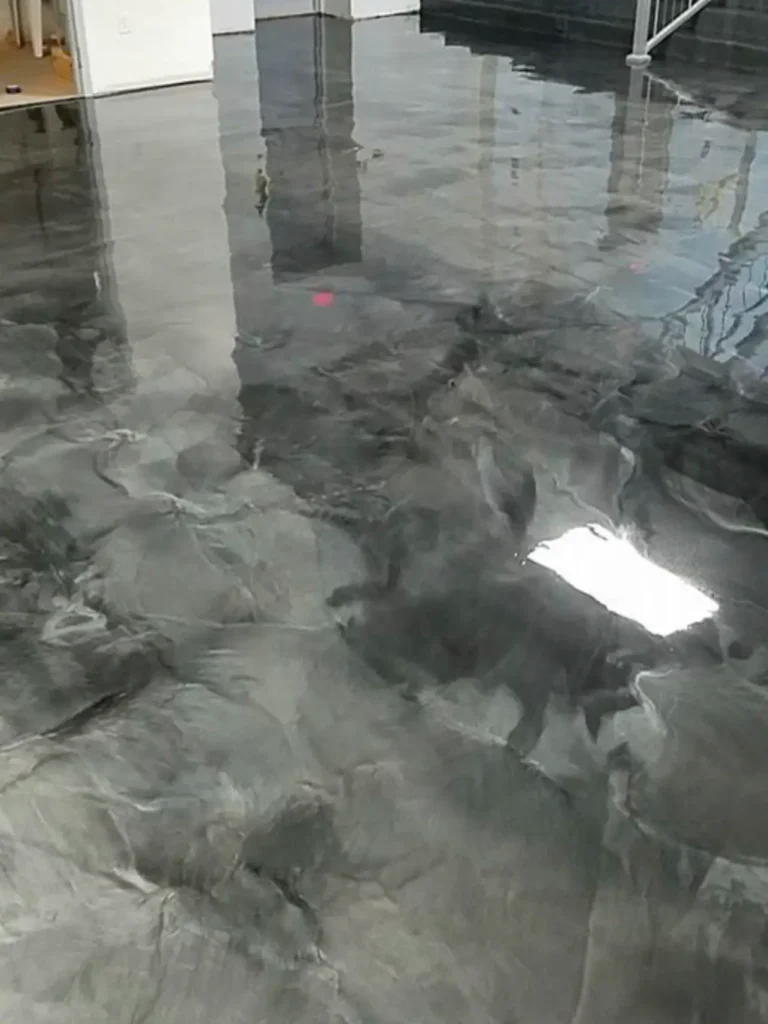
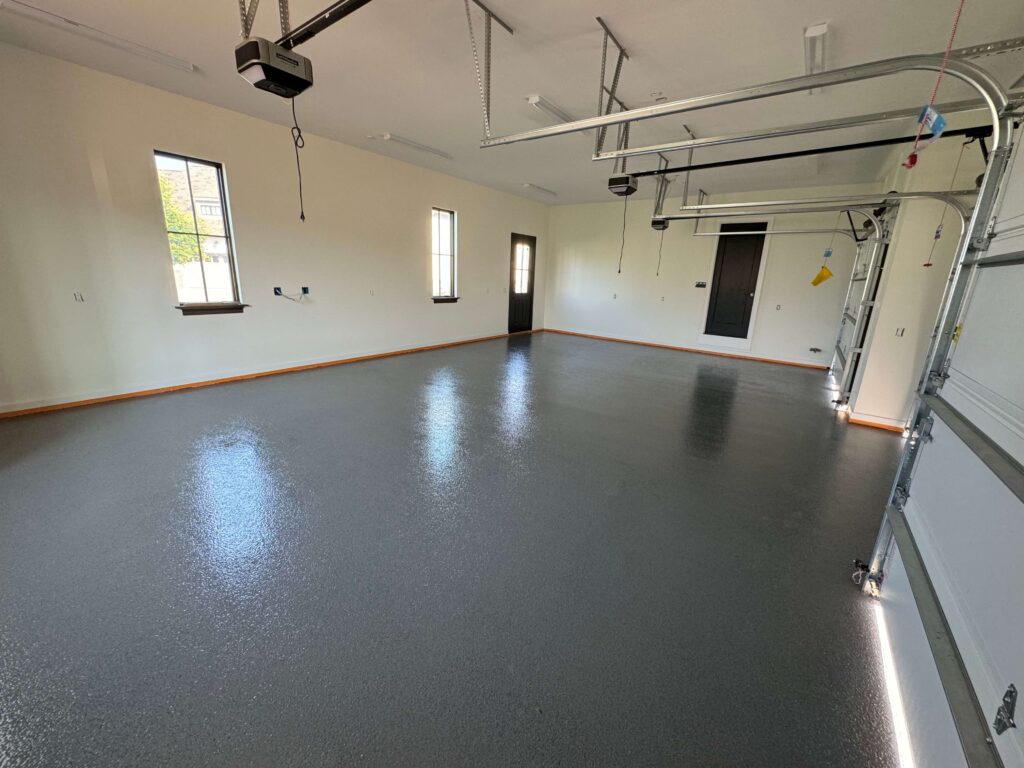
Garage, flake, and metallic floors: The concrete coating maintenance routine above keeps a garage epoxy floor, our flake epoxy flooring, and a metallic epoxy floor looking new. Curious about matching a new flake blend to an existing floor? Our color chart shows the options.
Polished concrete: A polished concrete floor has no coating on top, so it relies on dust mopping and damp mopping with a neutral cleaner, plus an occasional burnish to refresh the shine.
Sealed concrete: A sealed concrete surface benefits from resealing on a regular cycle, since the sealer is what blocks moisture and stains.
Pool decks and outdoor slabs: Rinse debris off a resurfaced pool deck and use the low-pressure wash approach above to keep it clean and slip resistant.
Keeping Your Warranty Valid
Good care and your coverage go hand in hand. Garage floors carry a lifetime adhesion warranty against peeling and delamination, and all other coatings carry a 1-year warranty, with the details spelled out in the written warranty you receive for your project. Following these concrete coating maintenance steps keeps the finish performing the way it should. You can review the full terms on our warranty information page, and the FAQs page answers more of the common questions we hear from Knoxville homeowners and facility managers. Want to see how these floors hold up over time? Browse our project gallery for finished examples.
Epoxy Floor Cleaning FAQs
What is the best way to clean an epoxy garage floor?
Sweep or dust mop regularly to keep grit off the surface, then damp mop weekly with warm water. For tougher dirt or salt film, diluted ammonia in warm water works well. Skip soap-based, acidic, and bleach cleaners, since those dull the finish over time.
How often should I clean my epoxy floor?
Sweep or dust mop every few days depending on traffic, damp mop weekly, spot clean spills as they happen, and do a deeper seasonal clean, especially after winter road salt.
Can I pressure wash a concrete coating?
For outdoor coatings like patios and pool decks, a low-pressure wash with a fan tip and a floor-safe cleaner works well. Keep the nozzle back from the surface so you clean it without stressing the coating.
What should I never use to clean an epoxy floor?
Avoid vinegar, citrus cleaners, soap-based cleaners, bleach, harsh solvents, wax or shine additives, and melamine foam erasers. These dull the gloss, leave a film, or degrade the coating over time.
Does cleaning my floor a certain way affect my warranty?
Yes, in the sense that neglecting basic concrete coating maintenance can accelerate wear that a warranty is not meant to cover. Following the routine in this guide, and avoiding the cleaners listed above, is what keeps the finish performing the way it should for the life of the warranty.
Epoxy Floor Cleaning Questions? Contact Us
If you are unsure about a cleaner, a stain, or a spot that will not lift, reach out before you scrub. We would rather help you protect the finish than fix it later. As a family-owned team with more than 60 years of combined experience and commercial-grade products on every job, we treat your floor like our own. Call (865) 388-2489 or contact us for care advice or a fresh quote anywhere in Knoxville, TN and nearby areas.