Yes, fall is one of the best times of year to coat a garage floor, as long as the work is done while temperatures are still mild or in a controlled space. A coating installed before winter protects your slab from road salt, snowmelt, and freeze-thaw damage, and gives you a floor that cleans up fast and stays slip-resistant all season. The one thing to get right is temperature, since epoxy needs the proper conditions to cure. Here is why timing it before winter pays off and how to do it the right way.
Why Winter Is Hard on a Bare Garage Floor
Winter is the toughest season your concrete faces. Three things do the damage:
- Road salt and de-icing chemicals. Your tires drag in salt and brine all winter. On bare concrete, those chlorides work into the surface and the pores, and the scaling they start turns into pitting and dusting over time.
- Freeze-thaw cycles. Salty meltwater seeps into cracks, then refreezes and expands when the temperature drops. That pressure widens cracks and breaks down the surface season after season.
- Moisture and stains. Slush, mud, and dripping antifreeze soak straight into an untreated slab, leaving stains that do not come out.
What a Coating Does for You All Winter
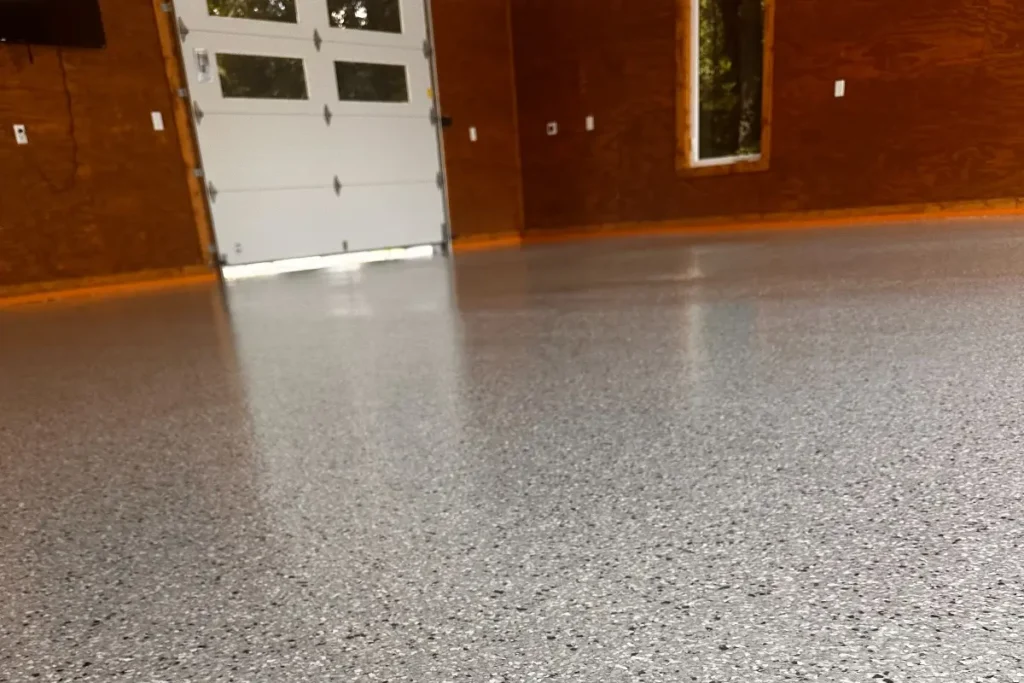
A professionally coated floor flips all of that. The chlorides that eat bare concrete just sit on top of a sealed garage floor until you rinse or mop them away. The surface is non-porous, so salt, water, and chemicals cannot get in. Slush and mud wipe up in minutes, a flake or textured finish adds traction underfoot when your shoes are wet, and the glossy surface reflects light to brighten up a dim winter garage. In short, winter stops being something your floor has to survive.
Why Fall Is the Sweet Spot
You can coat a floor almost any time, but fall has real advantages:
- You beat salt season. Get the floor coated and cured before the first salt comes off your tires, and you get the full benefit for the entire winter.
- The temperatures cooperate. Mild fall days sit in the range coatings cure best in, without the peak humidity of summer.
- You avoid the spring rush. Waiting until spring means a whole winter of salt on a bare slab, then joining the busiest season for installers.
- Repairs cost less now. Fixing cracks and pitting before winter is simpler than coating a floor the salt has already chewed up. Our guide on garage floor coating costs shows how repairs factor into a quote.
The best time to protect your garage floor is before its first winter of salt, not after it has spent a season eating into the concrete.
The One Thing to Get Right: Temperature
Here is the catch that trips up a lot of DIY projects. Standard epoxy cures best between about 50 and 80 degrees, and a concrete slab is almost always colder than the air around it. When the slab is too cold, the coating thickens, cures slowly, and may not bond or harden properly. High humidity causes problems too. That is why a garage-floor kit applied in an unheated garage on a cold weekend so often fails. Professionals manage this with temperature-controlled conditions, cold-weather and polyaspartic products that handle cooler temps, and by monitoring the floor through the full cure rather than rushing it. For more on timing, see our post on how long epoxy takes to cure.
Can You Still Coat in Winter?
Yes. A winter install is possible with the right products and controlled conditions, so if you miss the mild fall window, you are not stuck waiting until spring with a bare slab. It simply takes more planning, heating, and a longer cure. The good news for us is that East Tennessee winters are milder than the upper Midwest, and our fall temperatures stay workable later into the year, so the comfortable install window here runs well past the first leaves.
How We Time It in East Tennessee
When you reach out, we look at the condition of your slab, repair what needs repairing, and schedule the install for the right conditions. We use commercial-grade products and our signature epoxy and polyaspartic build, and we do not do one-day installs, because prep, coating, and curing each need time to protect your finish and your warranty. Once the floor is down, our care instructions cover the simple winter-salt routine that keeps it looking new, and every job is backed by a written warranty, with garage floors carrying a lifetime adhesion warranty detailed on our warranty information page.
Garage Floor and Winter FAQs
Is fall a good time to coat a garage floor?
Yes. Fall is one of the best times to coat a garage floor. Mild fall temperatures sit in the range coatings cure best in, and getting the floor coated and cured before winter means it is protected from road salt and freeze-thaw for the whole season.
Can you epoxy a garage floor in cold weather?
Yes, with the right approach. Standard epoxy cures best between about 50 and 80 degrees, and a cold slab slows or impairs curing. A winter install is possible using temperature-controlled conditions and cold-weather or polyaspartic products, but it takes more planning and a longer cure, which is why DIY kits applied in a cold garage often fail.
Does road salt damage a garage floor?
Road salt and de-icing chlorides damage bare concrete. They work into the surface and, combined with freeze-thaw cycles, cause scaling that turns into pitting and dusting. A sealed, coated floor holds the salt on top until you rinse it off, protecting the concrete underneath.
Beat the Salt. Coat Your Floor This Fall.
Want your garage floor protected before winter sets in? Reach out a few weeks ahead so we can schedule the install while conditions are right. As a family-owned team with more than 60 years of combined experience and no shortcuts on prep, we do it right the first time. Call (865) 388-2489 or contact us for a quote in Knoxville and nearby areas.