Quick answer: Yes, in many cases you can install epoxy flooring over tile or a wood subfloor. Epoxy can go over tile when the tile is sound, well bonded, and dry, and it can go over a wood subfloor when the subfloor is rigid, dry, and paired with a flexible primer built for wood movement. The catch is that each surface needs its own prep and system, and neither is a good candidate if it is loose, flexing, or holding moisture. When that is the situation, the smarter route is often to remove the tile or reinforce the wood and coat from a stable base.
We handle both surfaces regularly, including floors many contractors turn down. Here is what makes each one work, and how to tell whether your floor is a good fit for epoxy flooring over tile or a wood subfloor.
The Short Answer on Epoxy Flooring Over Tile or a Wood Subfloor
Epoxy flooring over tile or a wood subfloor comes down to two questions: is the surface underneath sound and dry, and is it getting the right primer and prep for what it’s made of? Get those two right and either surface can carry a durable coating. Skip them, and the coating is the thing that fails, not the tile or the wood underneath it.
Can You Put Epoxy Flooring Over Tile?
Epoxy can go over ceramic, porcelain, and many other tile types as long as the tile is structurally sound, well bonded to the substrate, clean, and dry. The work happens in the prep. Most tile is glazed, and epoxy will not stick to a slick glaze on its own, so the surface has to be mechanically abraded, usually with diamond grinding, to create a rough profile the coating can grab onto. That profiling step follows the same logic the International Concrete Repair Institute lays out in its surface-preparation guideline for getting a coating to bond permanently rather than just sit on top. From there, the grout lines and any low spots are filled so they do not telegraph through the finish, and the whole floor is moisture tested before anything is applied. Done properly, the result is a seamless epoxy floor that hides the old tile completely.
Tile is not a good candidate when it is loose, hollow-sounding, cracked, or sitting over a moisture problem. Coating over those issues just locks the problems in.
The Honest Caveat With Tile
Not every installer will tell you this, but grinding and profiling tile carries a risk: the process can loosen individual tiles or damage grout, and a single tile that lifts later can fail the coating above it. That is why some floors are better served by pulling the tile and coating the slab underneath instead. It is more work up front, but it removes the weak link and gives you a floor built on solid concrete. We look at the condition of your tile and tell you honestly which route makes more sense for your space rather than pushing whatever is fastest.
Can You Put Epoxy Over a Wood Subfloor?
Also yes, with an important difference. Wood flexes and expands with humidity, while cured epoxy is rigid, so coating a wood subfloor the same way you coat concrete leads to cracking at the seams. The fix is the right system and prep: a flexible primer or membrane that tolerates movement, applied over a subfloor that is genuinely stable.
For a wood subfloor to be a good candidate for epoxy, it should be:
- Structurally sound and rigid, well fastened to the joists with no flex, squeaks, or bounce.
- Dry, with moisture content in the range the coating system calls for, verified by testing rather than eyeballed — wood moisture needs vary by climate and use, which is why the USDA Forest Products Laboratory tests and publishes reference moisture-content data for wood in construction rather than relying on a single fixed number.
- Free of rot, mold, and warping, with any soft or damaged sections replaced first.
- Exterior-grade plywood where possible, since some interior-grade panels can delaminate under a coating.
- Sealed at the joints, with seams filled and primed so movement does not crack the finish.
When a wood subfloor has too much flex, the fix is often to add a rigid underlayment such as cement board before coating, which gives the epoxy the stable base it needs.
What Makes a Good Candidate for Epoxy Flooring Over Tile or a Wood Subfloor
Whether the existing surface is tile or wood, the same short checklist decides whether epoxy flooring over tile or a wood subfloor will actually last:
- Sound and well bonded: nothing loose, hollow, or lifting.
- Dry: no active moisture, confirmed by a moisture test.
- Stable: rigid underfoot, with minimal movement.
- Clean: free of wax, oil, and old coatings that block adhesion.
- In good repair: cracks, rot, and damage addressed before coating.
The question is rarely whether we can coat it. It is whether coating it now gives you a floor that lasts. Sometimes the honest answer is to pull the tile first, or reinforce the wood before it ever sees a coating.
Tile vs. Wood Subfloor: What Changes for Epoxy
| Factor | Tile | Wood Subfloor |
|---|---|---|
| Main prep step | Diamond grinding to profile the glaze | Fasten, level, and verify rigidity |
| Primer/system needed | Standard epoxy system after profiling | Flexible primer or membrane for movement |
| Biggest risk | Grinding loosens a tile or grout line | Coating cracks at seams if wood flexes |
| Moisture check | Moisture test before coating | Moisture meter reading against reference ranges |
| When to remove/reinforce instead | Loose, hollow, cracked, or water-damaged tile | Excess flex, rot, or unstable panels |
When Removing or Reinforcing Is the Smarter Move
If your tile is loose or water damaged, or your wood subfloor flexes and bounces, coating over it is borrowing against the future. In those cases, removing the tile and coating the slab, or adding a rigid underlayment over the wood, costs a little more time and money up front but saves you from a coating that cracks or peels within a year. Since redoing a failed floor means grinding everything off and starting over, doing it right the first time is the more cost-conscious choice. Our guide on what a floor coating costs in Knoxville walks through how prep and repairs factor into a quote.
Why Professional Prep Makes the Difference
This is exactly the kind of project where a big-box kit falls short. Bonding to glazed tile or flexible wood takes proper grinding, moisture testing, the right primer, and a system matched to the substrate, none of which comes in a weekend kit. We use commercial-grade products, do the prep that makes a coating hold, and do not rush the cure. Most of our installs run over more than one day for that reason, because prep and curing each need time to protect your finish and your warranty.
How We Handle It in Knoxville
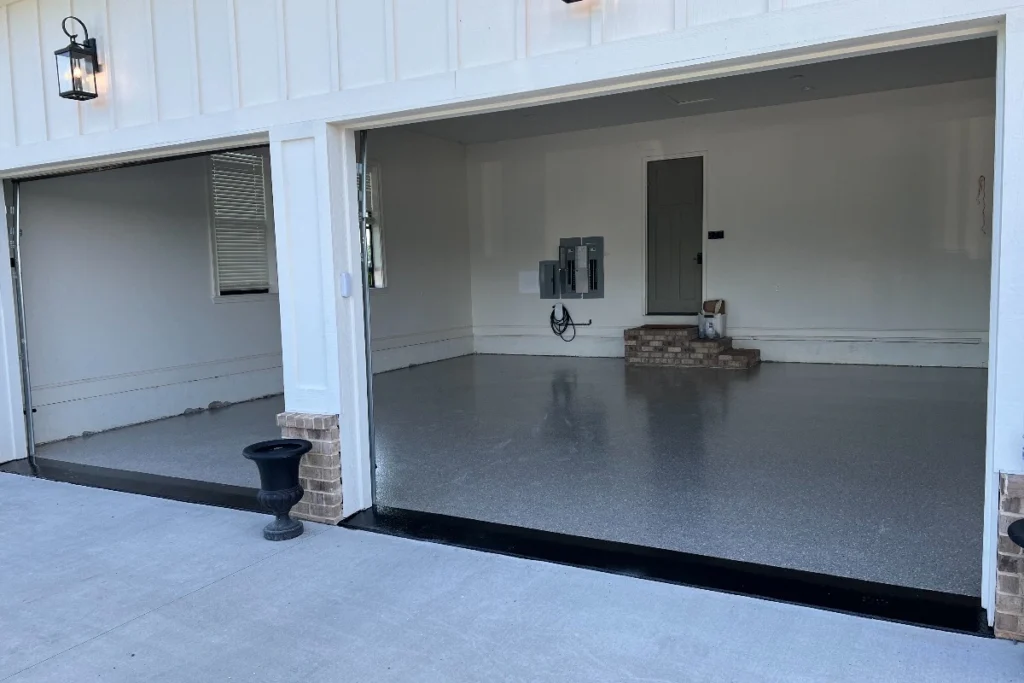
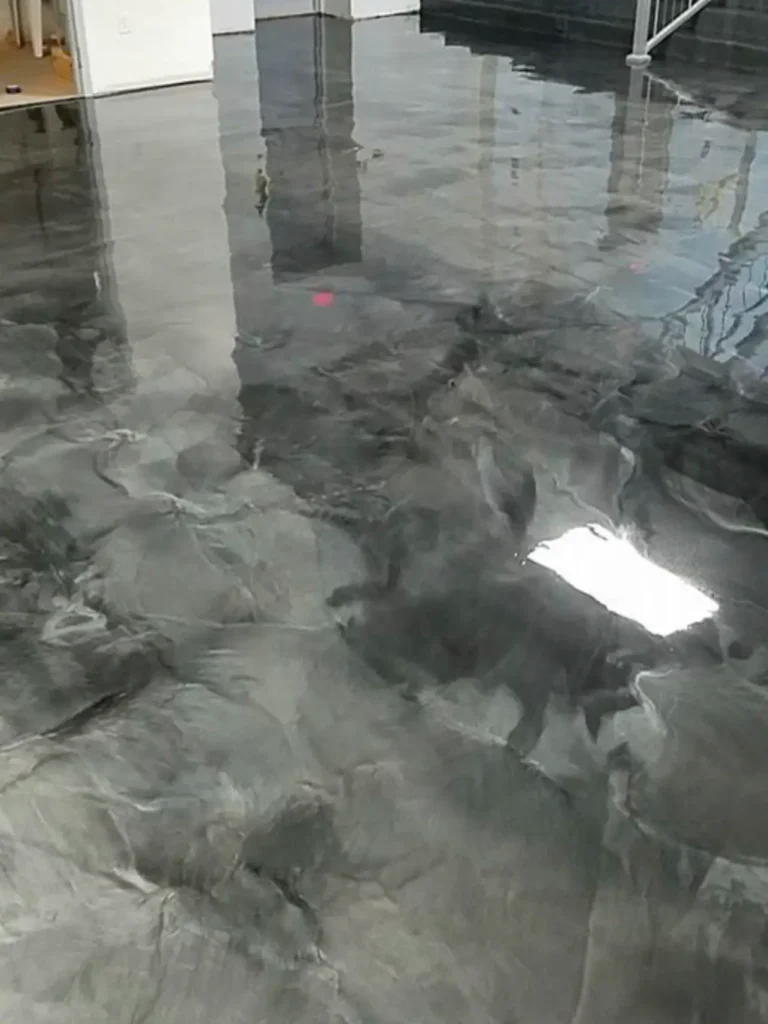
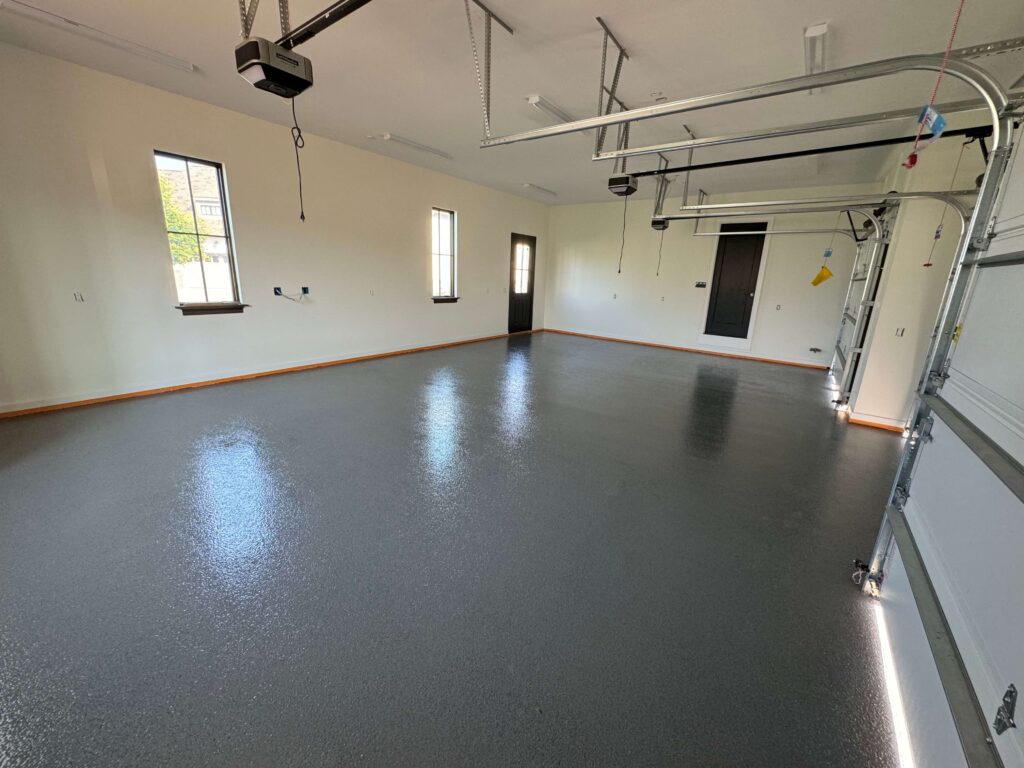
865 Coatings and Concrete Restoration takes on the surfaces a lot of companies turn away. We coat wood plank decks, wooden subfloors, and tile, and when the better path is to remove tile and coat the slab, we do that too. It starts with an on-site look at what you have, then a straight recommendation on the route and the system, whether that is a solid epoxy, our textured flake build, or a metallic finish. You can see completed work in our project gallery, and every job is backed by a written warranty, with garage floors carrying a lifetime adhesion warranty detailed on our warranty information page.
Epoxy Over Tile and Wood Subfloor FAQs
A few more questions on this come up often. Our full FAQs page covers more of them if you have others.
Can you install epoxy flooring over tile?
Yes, epoxy can be installed over ceramic, porcelain, and many other tiles when the tile is sound, well bonded, clean, and dry. Glazed tile must be mechanically ground to create a bonding profile, grout lines are filled, and the floor is moisture tested first. Loose, cracked, or moisture-affected tile should be repaired or removed before coating.
Can you put epoxy over a wood subfloor?
Yes, but wood flexes while epoxy is rigid, so it requires a flexible primer or membrane and the right system. The subfloor must be structurally sound, dry, rigid and well fastened, free of rot, and have sealed joints. Where there is too much flex, a rigid underlayment such as cement board is added first to prevent cracking.
Is it better to remove tile before applying epoxy?
Sometimes. Grinding tile can loosen individual tiles or grout, and a single tile that lifts later can fail the coating above it. If the tile is loose, hollow, cracked, or over a moisture problem, removing it and coating the slab underneath is usually the longer-lasting choice.
Will epoxy crack if applied over a wood subfloor?
It can if the wood moves too much and a rigid concrete-style coating is used. Using a flexible primer or membrane, stabilizing and fastening the subfloor, sealing the joints, and choosing a system designed for wood prevents cracking at the seams.
How do you know if a wood subfloor is too wet for epoxy?
A moisture meter reading is the only reliable way to know — visual dryness does not confirm it. Acceptable moisture content varies by region and wood type, so the subfloor should be tested and compared against the coating manufacturer’s range rather than assumed safe.
Not Sure If Your Epoxy Flooring Over Tile or a Wood Subfloor Project Is a Good Fit?
Send us a photo or have us take a look. We will tell you honestly whether epoxy flooring over tile or a wood subfloor makes sense for your space, or whether removing the tile or reinforcing the wood first is the smarter call. As a family-owned team with more than 60 years of combined experience and no shortcuts on prep, we do the job right the first time. Call (865) 388-2489 or request a quote online for a project in Knoxville and nearby areas.