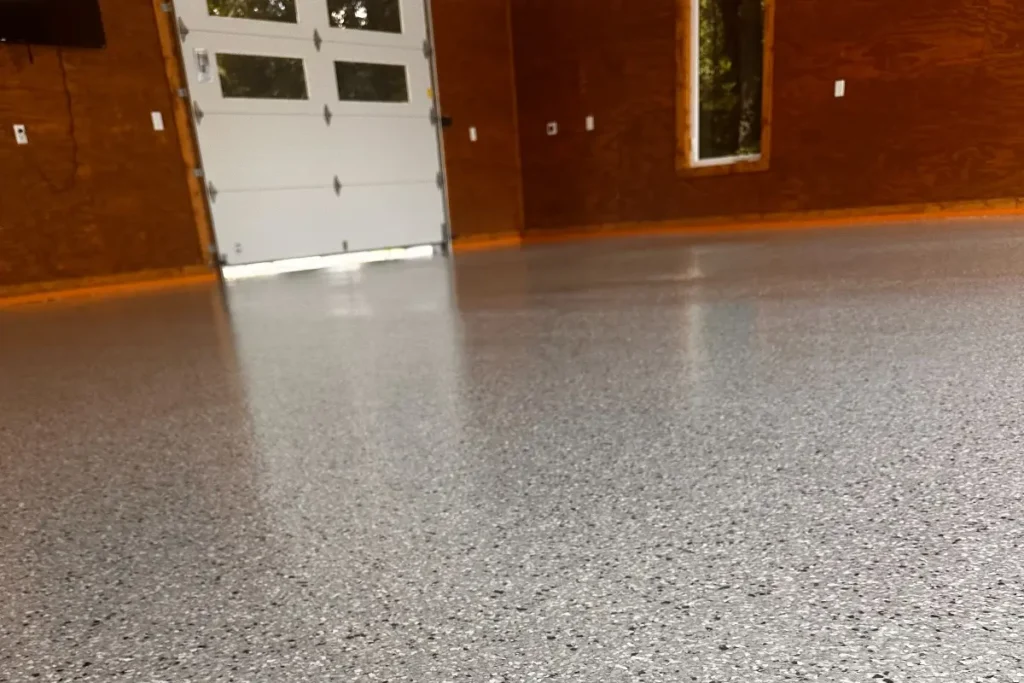
Most garage floor coating warranties are adhesion warranties, which means they cover the coating staying bonded to the concrete: it will not peel, bubble, or delaminate. A “lifetime” warranty almost always means for as long as you own your home, not literally forever, and it is often non-transferable. It usually does not cover normal wear, abuse, scratches, cracks in the concrete slab itself, or moisture coming up from below. The real value of any warranty comes down to two things: what is actually written on the page, and the prep and company standing behind it. Here is how to read one before you sign.
The Three Kinds of Coverage
“Warranty” can mean very different things depending on who is offering it. There are three types, and a strong offer addresses all three:
- Adhesion warranty: Covers the coating bonding to the concrete, so it will not peel, flake, bubble, or delaminate. This is the heart of a floor coating warranty and what “lifetime” usually attaches to.
- Product or material warranty: Comes from the manufacturer and covers defects in the coating material itself.
- Labor or workmanship warranty: Comes from the installer and covers the quality of the installation. This is the one a DIY kit can never give you, because you are the installer.
What “Lifetime” Actually Means
In the coating world, “lifetime” nearly always means the lifetime of your ownership of the home, not an unlimited promise and usually not one that transfers to the next owner. Some companies instead define it as the expected functional lifespan of the system. Neither is a bad thing, but the words matter, so read how your specific warranty defines “lifetime” and whether it transfers if you sell.
What a Garage Floor Coating Warranty Typically Covers
A solid garage floor coating warranty protects against the failures that would actually ruin a floor:
- Peeling and delamination: the coating losing its bond and separating from the slab.
- Bubbling and flaking: the finish lifting or breaking up.
- Hot-tire pickup: on better warranties, the coating lifting where warm tires sit.
- Staining from incidental spills: some warranties add coverage against stains from oil, coolant, and similar automotive fluids.
What It Typically Does Not Cover
Every warranty has exclusions. These are the common ones, and they are worth knowing before you expect coverage:
- Cracks in the concrete slab: the warranty covers the coating, not movement, settling, or heaving in the concrete underneath it.
- Moisture from below: hydrostatic pressure, intrusion, and efflorescence, unless a moisture-mitigating system was specifically installed.
- Abuse and neglect: gouges from dropped tools, scratches from dragging jacks or equipment, and damage from improper cleaning.
- Harsh chemicals: battery acid, brake fluid, paint stripper, and similar substances beyond the coating’s rated resistance.
- UV fading: bare epoxy can yellow in sunlight, which is why a UV-stable top coat matters.
- Damage from parking too early: driving on a floor before it has cured. Our guide on epoxy cure time explains how to avoid this.
- Third-party work: repairs or coatings applied by anyone other than the original installer.
A Warranty Is Only as Good as the Prep and the Company
Here is what the fine print does not say out loud. An adhesion warranty is only as reliable as the preparation underneath the coating. Adhesion depends on properly grinding the concrete and testing it for moisture before anything goes down. If a contractor skips the moisture test and the prep, the coating can fail no matter what the paperwork promises, so a warranty on an under-prepped floor is hollow from day one.
The second thing to weigh is whether the company will still be around to honor the coverage. A lifetime warranty is worth nothing if the business closes, and many coating companies do not last long. Look for a stable, established installer with a track record, not just a long warranty on a short history.
A lifetime warranty is only a promise on paper. What makes it real is the prep underneath the coating and the company still answering the phone years from now.
Questions to Ask Before You Sign
- Is the warranty provided in writing, with the terms spelled out?
- Does it cover adhesion, materials, and workmanship, or only one of those?
- What exactly is excluded?
- Is it transferable if I sell my home?
- What voids it?
- How long have you been in business, and who honors the warranty?
- Do you grind and moisture-test the slab as part of prep?
How to Keep Your Warranty Valid
Once your floor is installed, a little care protects your coverage. Follow the cure timeline before walking on or parking on the floor, stick to the recommended cleaners in our care instructions, avoid dragging heavy or sharp items across the surface, and leave repairs to your installer rather than applying a store-bought coating on top.
What We Cover
At 865 Coatings and Concrete Restoration, our garage floors carry a lifetime adhesion warranty against peeling and delamination, and all other coatings carry a 1-year warranty. Every project comes with a written warranty that spells out exactly what is covered, and you can review the full terms on our warranty information page before any work begins. We can offer real adhesion coverage because of how we prepare each floor: diamond grinding and moisture evaluation, commercial-grade products, and our signature epoxy and polyaspartic build. We are a family-owned team with more than 60 years of combined experience, so we plan to be here when you need us. More answers are on our FAQs page.
Garage Floor Coating Warranty FAQs
What does a lifetime garage floor coating warranty cover?
A lifetime garage floor coating warranty is mainly an adhesion warranty. It covers the coating staying bonded to the concrete, so it will not peel, bubble, or delaminate for as long as you own the home. Better warranties also cover hot-tire pickup and staining from incidental automotive fluids.
What does lifetime mean on a floor coating warranty?
In the coating industry, lifetime almost always means the lifetime of your ownership of the home, not forever, and the coverage is often non-transferable. Some companies define it as the expected functional lifespan of the system, so read how your specific warranty defines the term.
Does a garage floor coating warranty cover cracks in the concrete?
No. A coating warranty covers the coating, not the concrete slab beneath it. Cracks, settling, heaving, and moisture coming up from below are typically excluded, unless a moisture-mitigating system was specifically installed.
What voids an epoxy garage floor warranty?
Common ways to void coverage include parking on the floor before it has cured, abuse such as dragging heavy equipment or dropping sharp tools, cleaning with harsh chemicals, and having a third party apply repairs or another coating on top. Skipped surface prep by the installer, like no moisture test, can also undermine an adhesion warranty from the start.
Know Exactly What Your Floor Is Backed By
Before you sign with anyone, ask to see the warranty in writing and ask how they prep the slab. We are glad to walk you through ours line by line. As a family-owned team with more than 60 years of combined experience and a prep-first process, we back our garage floors with a lifetime adhesion warranty. Call (865) 388-2489 or contact us for a quote in Knoxville and nearby areas.